.png)
Gym Risk Assessment: Safety Guide for Fitness Facilities

As regular gym-goers ourselves here at DuoDynamic Safety, we understand first-hand the importance of creating a safe training environment. Whether you're lifting weights, running on a treadmill or attending a group fitness class, safety should never be compromised. For gym owners and managers, conducting a thorough gym risk assessment is both a legal requirement and fundamental to protecting your members, staff and business.
In this blog, we'll walk you through everything you need to know about gym risk assessments, from identifying common hazards to implementing effective control measures that keep everyone safe.
What is a Gym Risk Assessment?
A gym risk assessment is a systematic examination of your facility to identify potential hazards that could cause harm to members, staff or visitors. The process involves evaluating risks, implementing control measures and regularly reviewing safety procedures to make sure your gym remains a safe environment for physical activity.
Under the Health and Safety at Work etc. Act 1974 and the Management of Health and Safety at Work Regulations 1999, all gym owners and operators have a legal duty to assess and manage health and safety risks. This applies whether you run a large commercial fitness centre, a boutique studio or a small independent gym.
Why Gym Risk Assessments Matter
The fitness industry has experienced remarkable growth in recent years, becoming an integral part of modern lifestyle. However, with increased participation comes increased responsibility for safety.
A risk assessment helps you:
Protect people – Keep members, staff and visitors safe from harm.
Meet legal obligations – Comply with health and safety legislation.
Avoid financial losses – Prevent costly accidents, insurance claims and legal action.
Build trust – Demonstrate your commitment to member wellbeing.
Strengthen reputation – Establish your facility as professional and safety-conscious.
The Five-Step Risk Assessment Process

The Health and Safety Executive (HSE) recommends a five-step approach to risk assessment that applies perfectly to gym environments:
Step 1: Identify the Hazards
Walk through your entire facility, examining every area where people work, train or pass through. Look for anything that has the potential to cause harm.
Equipment-Related Hazards:
Crush injuries from dropped free weights or weight stack failures.
Entrapment in moving parts of resistance machines.
Falls from treadmills and cardiovascular equipment.
Impact injuries from dropped kettlebells, medicine balls or weights.
Equipment failure from poor maintenance or incorrect assembly.
Sharp edges or protruding parts on damaged equipment.
Environmental Hazards:
Slippery floors from sweat, water or cleaning products.
Uneven flooring or worn surfaces.
Poor lighting in certain areas.
Inadequate ventilation leading to poor air quality.
Excessive noise levels.
Extreme temperatures (overheating or inadequate heating).
Obstructed walkways or emergency exits.
Trailing cables from equipment.
Hygiene Hazards:
Contaminated equipment surfaces.
Inadequate cleaning of high-touch areas.
Poor changing room and shower hygiene.
Insufficient hand sanitiser provision.
Spread of infections through shared equipment.
Chemical Hazards:
Cleaning products and disinfectants.
Chlorine in pool areas (if applicable).
Improper storage of hazardous substances.
Fire Hazards:
Electrical equipment (high concentration in gyms).
Blocked fire exits or fire-fighting equipment.
Inadequate fire detection systems.
People-Related Hazards:
Inexperienced gym users attempting advanced exercises.
Members with pre-existing medical conditions.
Overcrowding during peak times.
Aggressive behaviour or conflict between members.
For more guidance on identifying hazards, see our article: What is a Risk Assessment and Who Needs One?
Step 2: Decide Who May Be Harmed and How
Consider all the different groups of people who use your facility and how they might be affected by the hazards you've identified.
Gym Members:
New members unfamiliar with equipment.
Experienced members who may take risks or push limits.
Vulnerable groups (older adults, pregnant women, people with disabilities or health conditions).
Children and young people.
Staff:
Fitness instructors and personal trainers.
Reception and administrative staff.
Cleaning staff.
Maintenance workers.
Management.
Visitors:
Prospective members touring the facility.
Contractors performing maintenance or repairs.
Delivery personnel.
Emergency services (in case of incident).
Examples of how people might be harmed:
Crush injuries from free weights or machine weight stacks.
Strains, sprains and muscle tears from improper lifting technique or overexertion.
Impact injuries from dropped weights.
Slips, trips and falls on wet or cluttered floors.
Cardiovascular events (heart attack, stroke) from overexertion, particularly in those with underlying conditions.
Heat exhaustion or dehydration in poorly ventilated spaces.
Infections from inadequate hygiene practices.
Burns or skin irritation from chemical cleaning products.
Electric shocks from faulty equipment.
Step 3: Evaluate the Risks and Decide on Precautions
For each hazard identified, assess the level of risk and determine what control measures are needed to eliminate or reduce that risk to an acceptable level.
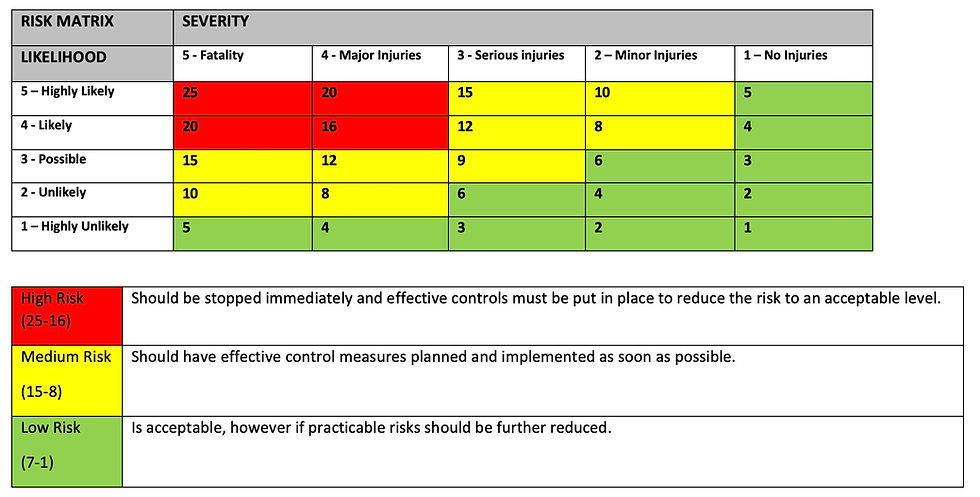
Risk evaluation considers two factors:
Likelihood – How probable is it that harm will occur?
Severity – How serious would the consequences be?
Use a risk matrix to prioritise actions:
The Hierarchy of Controls
Apply controls following this order of effectiveness:
Elimination – Remove the hazard entirely (e.g., removing unsafe equipment).
Substitution – Replace with something less hazardous (e.g., rubber-coated weights instead of metal).
Engineering controls – Modify equipment or environment (e.g., non-slip flooring, safety guards on machines).
Administrative controls – Implement policies and procedures (e.g., induction programs, equipment usage rules or cleaning schedules).
Personal Protective Equipment (PPE) – Last resort where other controls aren't sufficient (e.g., gloves for cleaning staff).
Practical control measures for gyms.
Equipment Safety:
Establish regular maintenance schedules for all equipment.
Conduct daily visual inspections before opening.
Follow manufacturer guidelines for servicing and repairs.
Remove faulty equipment from use immediately and tag it clearly.
Provide adequate spacing between equipment to prevent collisions.
Install safety features like emergency stop buttons on treadmills.
Use equipment designed to industry standards (PUWER regulations apply).
Floor and Surface Safety:
Install non-slip, shock-absorbing flooring in weight areas.
Use appropriate floor surfaces for different zones (rubber for free weights, suitable surfaces for cardio areas).
Establish regular cleaning protocols, especially for high-sweat areas.
Place "wet floor" signs immediately after cleaning.
Ensure good drainage in wet areas.
Repair any damaged flooring promptly.
Member Induction and Education:
Provide inductions for all new members.
Offer equipment demonstrations and technique coaching.
Display clear usage instructions on or near each piece of equipment.
Create posters showing proper lifting techniques.
Implement a system for members to request assistance.
Supervision and Staffing:
Maintain adequate staff-to-member ratios, especially during peak times.
Ensure qualified fitness professionals are always present during operating hours.
Conduct regular floor walks to check for hazards and assist members.
Establish clear protocols for intervening when unsafe practices are observed.
Environmental Controls:
Install effective ventilation and climate control systems.
Maintain comfortable temperature ranges.
Provide adequate lighting throughout, including changing areas and emergency routes.
Control noise levels to prevent hearing damage.
Keep walkways clear and maintain minimum aisle widths.
Mark emergency exits clearly and keep them unobstructed.
Hygiene and Cleanliness:
Provide readily accessible sanitising stations throughout the facility.
Supply antibacterial wipes for members to clean equipment before and after use.
Ensure changing rooms and showers are cleaned regularly.
Follow COSHH regulations for storing and handling cleaning chemicals.
Display hygiene guidance and encourage members to wipe down equipment.
Emergency Preparedness:
Install and maintain fire safety equipment.
Make sure at least one staff member is always first aid trained.
Keep first aid kits fully stocked and easily accessible.
Consider installing an Automated External Defibrillator (AED) – essential for cardiac emergencies.
Display emergency contact numbers prominently.
Conduct regular fire drills and emergency evacuation practices.
Create clear emergency procedures and train all staff.
Step 4: Record Your Findings and Implement Them
If you employ five or more people, you must record the significant findings of your risk assessment in writing. However, documentation is best practice regardless of business size.
Your risk assessment record should include:
Date of assessment and review dates.
Name of person conducting the assessment.
Areas and activities assessed.
Hazards identified.
Who might be harmed and how.
Existing control measures in place.
Risk ratings (likelihood × severity).
Additional actions needed to control risks.
Who is responsible for implementing actions.
Target completion dates.
Sign-off when actions are complete.
Implementation is critical:
Communicate findings to all staff members.
Make sure everyone understands their responsibilities.
Allocate adequate resources (time, budget, personnel).
Set realistic but prompt timescales for implementing controls.
Monitor progress and follow up on outstanding actions.
Keep staff informed of changes and improvements.
GET YOUR FREE RISK ASSESSMENT TEMPLATE:
Step 5: Review and Update the Risk Assessment
Risk assessments are not "set and forget" documents. Your gym is a dynamic environment and your assessment must evolve accordingly.
Review your risk assessment:
At least annually as standard practice.
After any significant changes to your facility, equipment or operations.
Following an accident, near-miss or dangerous occurrence.
After receiving feedback from staff or members about safety concerns.
When new legislation or industry standards are introduced.
What to check during reviews:
Are the original control measures still effective?
Have new hazards been introduced?
Have there been any incidents that weren't anticipated?
Is equipment still being properly maintained?
Are staff following procedures correctly?
Have staffing levels or qualifications changed?
Keep records of all reviews and updates to demonstrate ongoing commitment to safety.

Training for Gym Staff
Staff Qualifications: Adequate Fitness Instructor certifications.
Health and Safety Training:
General workplace health and safety awareness.
Emergency procedures and evacuation protocols.
Manual handling techniques.
First Aid Training...
Setting formal risk assessments and procedures aside, fostering a strong safety culture makes your gym even safer.
Lead by Example:
Management and senior staff must visibly prioritise safety.
Follow all safety procedures yourself.
Never cut corners or overlook unsafe practices.
Celebrate safety improvements and good safety behaviour.
Encourage Reporting:
Make it easy for staff and members to report hazards or near-misses.
Create a non-punitive environment where reporting is welcomed.
Act on reports promptly and communicate what action has been taken.
Thank people for bringing safety issues to your attention.
Make Safety Visible:
Display safety posters and guidance throughout your facility.
Show exercise demonstrations and proper technique reminders.
Highlight emergency equipment locations.
Legal Obligations and Compliance
Understanding your legal position helps achieve full compliance and protects your business.
Key legislation affecting gyms:
Health and Safety at Work etc. Act 1974 – General duty to ensure health, safety and welfare of employees and others affected by your business.
Management of Health and Safety at Work Regulations 1999 – Requires risk assessments and implementation of preventive measures.
Provision and Use of Work Equipment Regulations 1998 (PUWER) – Covers maintenance, inspection and safe use of gym equipment.
Control of Substances Hazardous to Health Regulations 2002 (COSHH) – Applies to cleaning chemicals and pool chemicals.
Regulatory Reform (Fire Safety) Order 2005 – Requires fire risk assessment and appropriate fire safety measures.
Equality Act 2010 – Requires reasonable adjustments for disabled gym users.
Data Protection Act 2018 / UK GDPR – Governs how you handle member health information.
Reporting requirements:
Under RIDDOR (Reporting of Injuries, Diseases and Dangerous Occurrences Regulations 2013), you must report:
Deaths.
Specified injuries (e.g. certain fractures).
Injuries preventing someone from doing their normal work for more than seven consecutive days.
Diagnosed occupational diseases.
Dangerous occurrences (near-miss events with potential for serious harm)...
How DuoDynamic Safety Can Help Your Gym
A comprehensive gym risk assessment is the foundation of your health and safety approach. As gym-goers ourselves, we understand the fitness industry from the inside. We know what works in real gym environments.
We provide:
Full facility risk assessments tailored to your gym.
Staff training in health and safety and fire safety.
Documentation including SOPs, induction templates and health and safety policies.
Ongoing support and annual reviews.
Whether you need a complete health and safety audit or help improving your existing documentation, we'll provide practical solutions that keep your members safe and your business protected.
Get in touch today for a no-obligation chat about your gym's health and safety needs.
Frequently Asked Questions (FAQs)
Do I need to conduct a risk assessment for my gym?
Yes, if you employ anyone (including yourself as a sole trader with employees), you are legally required to conduct risk assessments under the Management of Health and Safety at Work Regulations 1999. Even if you don't employ anyone, risk assessments are essential best practice for protecting gym members and your business. The risk assessment should cover all aspects of your gym operation, including equipment, facilities, activities and different user groups.
How often should gym risk assessments be reviewed?
You should review your gym risk assessment at least annually as a minimum. However, you must also review it whenever there are significant changes, such as: introducing new equipment or activities, following any accidents or near-misses, after refurbishment or layout changes, when new legislation is introduced or if staff or members raise safety concerns. Many gyms find it helpful to conduct quarterly reviews of high-risk areas and annual full facility assessments.
Who should conduct a gym risk assessment?
The gym owner or manager is ultimately responsible for ensuring risk assessments are completed. However, you can appoint a "competent person" to carry out the assessment, someone with suitable training, knowledge and experience in health and safety. This could be an appropriately trained staff member or an external health and safety consultant like ourselves. For complex facilities or if you lack in-house expertise, it's advisable to seek professional support. Learn more about competence requirements in our article: The Role of a Competent Person in Health and Safety.
What are the most common hazards in gyms?
One of the most common gym hazards include: faulty or poorly maintained equipment (causing crush injuries, entrapment or equipment failure), slippery floors from sweat or cleaning products (causing slips and falls), free weights and weight plates (causing impact injuries, crush injuries or strains), cardiovascular equipment particularly treadmills (causing falls or cardiovascular events from overexertion), poor hygiene allowing infection spread, fire risks from high concentrations of electrical equipment and inexperienced members attempting advanced exercises without proper instruction.
Key Takeaways
Gym risk assessments are a legal requirement and essential for protecting members, staff and your business from harm.
Follow the five-step HSE process: identify hazards, determine who might be harmed, evaluate risks and implement controls, record findings and review regularly.
Common gym hazards include equipment failures, slippery floors, improper equipment use, inadequate supervision and poor hygiene.
Implement control measures following the hierarchy of controls: elimination, substitution, engineering controls, administrative controls and PPE.
At least one first-aid trained staff member must be present during all operating hours; consider installing an AED.
Regular equipment maintenance and daily inspections prevent accidents and equipment-related injuries.
Staff qualifications matter, ensure all instructors hold appropriate fitness and safety certifications.
Review risk assessments at least annually and after any significant changes, incidents or new equipment introduction.
Create a safety culture where reporting hazards is encouraged, safety is visible and everyone takes responsibility.
Need expert support with your gym risk assessment, staff training or health and safety compliance? Contact DuoDynamic Safety today to speak with our qualified health and safety professionals who understand the fitness industry.
References:
Health and Safety Executive. Managing risks and risk assessment at work. Available at: https://www.hse.gov.uk/simple-health-safety/risk/index.htm
Health and Safety Executive. Leisure activities guidance. Available at: https://www.hse.gov.uk/entertainment/leisure/index.htm
Health and Safety at Work etc. Act 1974. Available at: https://www.legislation.gov.uk/ukpga/1974/37/contents
Management of Health and Safety at Work Regulations 1999. Available at: https://www.legislation.gov.uk/uksi/1999/3242/contents
The Provision and Use of Work Equipment Regulations 1998. Available at: https://www.legislation.gov.uk/uksi/1998/2306/contents


Comments